Search

Showing posts with label takahata. Show all posts

2020-04-06

2nd Anniversary of Isao Takahata's Passing


April 5 marks the second anniversary since the passing of animation legend and Studio Ghibli co-founder Isao Takahata. His loss continues to be profound, but we are blessed with a career of animated masterworks that span five decades. His work will stand the test of time and his legend will continue to grow.

In the United States, all of Takahata's Studio Ghibli features are available on DVD and Blu-Ray, courtesy of GKIDS. Of the pre-Ghibli period, Lupin the 3rd: The Complete First TV Series is available on DVD, and Horus, Prince of the Sun is available on DVD and Blu-Ray, all courtesy of Discotek Media.

The titles yet to be released on our shores include Heidi, Girl of the Alps, 3000 Leagues in Search of Mother (aka Marco), Anne of Green Gables, Jarinko Chie, Gauche the Cellist and The Story of Yanagawa Waterways. In addition, the 2003 anthology film Winter Days, of which Takahata contributed one segment, remains exclusive to Japan. Fan translations for all of these works do exist and can be downloaded online or seen on YouTube (visit the Videos sections for more details). The DVD and Blu-Ray for Gauche does include English subtitles, so you are welcome to import.

Much thanks to Studio Ghibli Weblog for their image of Takahata with his anime characters. Don't forget to visit their site and share with friends and family!

2020-03-31

Hayao Miyazaki's Eulogy of Isao Takahata (English Subs)


It's hard to believe that Isao Takahata has been gone for nearly two years. His presence and impact found in his work continues to shine and inspire us, and will continue to do so for many years to come. But his loss is equally profound and will always linger in our hearts.

At the public memorial service at the Ghibli Museum, Hayao Miyazaki offers a touching tribute to his lifelong friend, colleague and rival, offering a couple personal anecdotes from their days at Toei Doga in the 1960s. We still feel the emotional weight of his words.

2018-05-15

Video: Hayao Miyazaki Delivers His Eulogy for Isao Takahata


I have found two videos from the Isao Takahata memorial service at Ghibli Museum. The first includes the complete remarks from Hayao Miyazaki. The second video is a news report from Japanese television, featuring clips of other individuals. Unfortunately, there are no English translations available at this time. If anyone would kindly provide a translation of Miyazaki-san's remarks, we would all be very grateful.

Update 5/16: The first video has been pulled from YouTube. Hayao Miyazaki's complete remarks in Japanese are available below. We still need help with an English translation. Much thanks to Infoglitz and Becqerine from Reddit for their assistance.


朴のニックネームは確かではありませんが、主にとにかく午前中に嫌な男ですが、東映アニメーションで働いていてもタイムカードを押した後、私が "Pakpaku"として買ったパンを食べて、彼は彼が蛇口から水を飲んでいたと言いました。それが朴氏になったという噂です。 
それは記念碑の形ではありませんが、私が今日書いたことを読むでしょう。 
朴氏は、彼が95歳になるまで生きると信じていた。私は時間がないと思った。 9年前、医者からの電話がありました。 「あなたが友達なら、タカハタのたばこを止めません」それは深刻な恐ろしい声でした。鈴木さん(鈴木俊夫さん)と鈴木さんは、医師の力を恐れてテーブルを横切ってお互いに向き合っていました。正しい姿勢で話すのは初めてのことでした。 「朴、喫煙をやめてください」と私は思います。 「働き続けるためにはやめてください」これはスズキの言葉です。私は、言い訳や反対が怒って爆発すると思ったが、「朴さん、ありがとう、私は辞める」と朴氏は平凡に言って頭を下げた。そして、朴氏は実際に喫煙をやめました。私は朴氏のそばで、たばこを吸った。 「いい香りだと思うが、まったく吸いたくない」と朴氏は語った。彼は上の俳優だった。結局のところ、私はそれが95歳になる人であると思っていました。 
1963年、Parkは27歳でした。私が22歳の時に初めて会った。私はまだその言葉を聞いた日を覚えています。私は夕暮れのバス停で練馬バスに向かうのを待っていた。若い男が雨の水たまりが残っている通りに近づいて来ました。そこに静かで賢明な見方がありました。高畑功朴氏に会った瞬間だった。 55年前ですが、私はそれをはっきりと覚えています。当時の朴氏の顔はまだ覚えています。 
次回は、東映アニメーションの労働組合の関係者にプッシュされたときパクと出会った。朴氏は副会長である。私は緊張し、悪心に悩まされ始めました。まだ組合事務所のプレハブにいて、私は朴氏と話をして狂った。すべて。私たちは私たちの仕事に満足していませんでした。私はより遠く、深く、より誇りに思うように仕事をしたかったのです。私は何をしなければならないのですか… …パークの文化は圧倒的でした。私は得ることが難しい人に会うことができてうれしかったです。
(「高原を監督する監督、ホルスの君の王子様」の冒険)は難しいものでした。スタッフは新しい方向性について不器用だった。仕事は遅れて遅れ、会社全体を巻き込んだ事件になった。パークのべたつきは超人的だった。会社の偉大な人に脅かされ、私が泣いても彼は抱きしめていた。私は夏の空調が止まった休日だったので、私は自分自身で大きな紙を背景に背景の絵を書きました。会社と組合との間の合意の下で休日の仕事が許可されていなくても、私はそれを保つことができませんでした。タイムカードを押す必要はありません。 
最初の問題(プレビュー)を見たとき、私は動くことができませんでした。それは感動しなかった、それは驚きに圧倒された。会社のプレッシャーの下で、私は "失われた信仰の森"の場面がかき消されないようになっていることを知っていました。パークはチームと強く交渉し、最終的に各カットの枚数まで約束し、必要な生産日を約束しなければならなかった。当然ながら、約束がはみ出し、朴氏が原稿を書くたびに約束された。朴氏は最後の原稿をどのくらい書きましたか?私も多くの仕事をしていましたが、私は朴氏の闘争に近づく時間がありませんでした。 
最初の号で初めて、「失われた信仰の森」のヒルダの場面を見ました。圧倒的な表現であった。どのような強い画像。それはどんな優しさでしたか?私は朴氏がこれを表現したかったことをはじめて理解した。朴氏は彼の仕事を成し遂げていた。リリースから30年を経た2000年には、この映画に関連する人々のグループがMr.パーク。当時の会社責任者、経営幹部、中堅のスタッフが会社やサイトを挟んで苦しんでいる、生産の進捗状況、職員を描く、女性の背景や彩色、撮影、録画、編集などスタッフが集まった。興行収入はなかったが、誰も気にしなかった。 
パーク、私たちはその時たくさん住んでいました。朴氏は私たちが住んでいた方法でした。ありがとう、朴氏。私は55年前にその雨のバス停で電話をした朴氏を決して忘れないだろう。ごめんなさい。

Photos: Isao Takahata Memorial Service

Photos: Isao Takahata Memorial Service

Photos: Isao Takahata Memorial Service

Photos: Isao Takahata Memorial Service

Photos: Isao Takahata Memorial Service

Photos: Isao Takahata Memorial Service

Photos: Isao Takahata Memorial Service

Photos: Isao Takahata Memorial Service

Photos: Isao Takahata Memorial Service

The following photos are from the memorial service honoring the late Isao Takahata at the Ghibli Museum on May 15. The event was attended by 1,200 people including many prominent filmmakers, producers and actors, as well as family and friends.

Thanks to Huffington Post Japan for posting these photographs online.

Isao Takahata Memorial Service at Ghibli Museum

Isao Takahata Memorial Service at Ghibli Museum

Isao Takahata Memorial Service at Ghibli Museum

Isao Takahata Memorial Service at Ghibli Museum

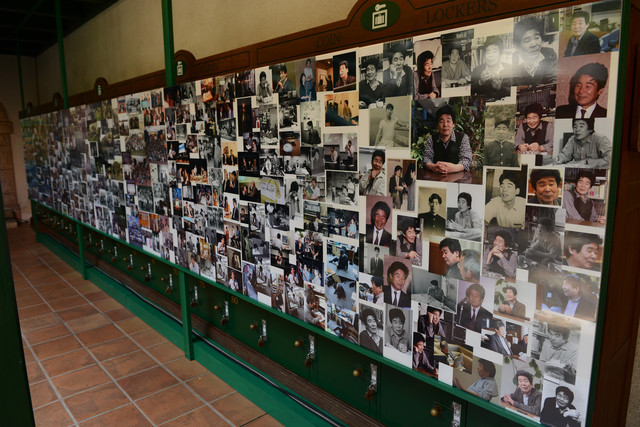
Today, friends, family and colleagues paid tribute to Studio Ghibli co-founder Isao Takahata at a public memorial service at the Ghibli Museum in Mitaka, Japan. The event was open to the public and featured many prominent artists and filmmakers whose lives intersected with the beloved director over the past 60 years. The museum displayed a wonderful floral display in the main hall, and also included a large montage of photographs featuring Paku-san over the years, as well as a collection of his many published books.

Animators and filmmakers in attendance included many alumni from Toei Doga, where Takahata began his career in 1958 after graduating from Tokyo University (he was courted by the movie studio while still a student. Yasuo Otsuka and Yoichi Kotabe were present along with the rest of the old gang. Dutch animator Michael Dudok De Wit, director of the 2016 Academy Award-nominated animated feature The Red Turtle (produced by Studio Ghibli under the personal supervision of Takahata) was also in attendance. Yoshiaki Nishimura, the Ghibli alumni who founded Studio Ponoc, was also present, as was Joe Hisaishi, the music composer whose movie break came in Nausicaa of the Valley of Wind. Fifty journalists and 1,200 attendees were present to record the event and pay tribute to a legendary and beloved icon.

Many prominent friends and family paid tribute with spoken eulogies during the service. The most important speaker at the event, of course, was Hayao Miyazaki, who forged a friendship and career with Takahata. Reading from a written text, Miyazaki-san delivered a moving eulogy to his brother, visibly grieving and emotionally shaken, and occasionally fighting back tears. Toshio Suzuki, Ghibli co-founder and Miyazaki's most loyal friend, sat by his side support, likewise overcome by emotion.

Speaking of his friend, Miyazaki remarked, "I always thought that Takahata was going to live until he was 95 years old and when he died, I was very impressed, because I realized that I also have little time left." He spoke of their longtime friendship during long pauses, "I met Paku-san in 1963 while he was waiting for the bus. He was 27 years old and I was just 22. I thought he was a very interesting and intelligent person. I remember it as if it were yesterday."

Miyazaki concluded his statements by saying, "I will never forget the day when Paku-san approached the bus stop and we met. He will be with me all my life."

Much thanks to Generacion Ghibli and 20 Minutos for their reporting and providing translated excerpts from Hayao Miyazaki's eulogy.

2018-05-03

Studio Ghibli Farewell Ceremony for Isao Takahata

Hayao Miyazaki and Isao Takahata

This week, Studio Ghibli announced the details for their upcoming Farewell Ceremony for founding director Isao Takahata, who passed away on April 5 after a battle with lung cancer. The event will be open to the public and will take place on May 15 at the Ghibli Museum in Mitaka, Japan. The event will run from 2:00 pm to 5:00 pm and celebrate the amazing life and career of the animation legend, from his starting days at Toei Doga to his acclaimed masterpieces at Studio Ghibli.

Hayao Miyazaki will attend the event and issue a public tribute to his lifelong friend and brother. This will be the first public statement made by Miyazaki since Takahata's death. News outlets have reported that the Ghibli co-founder is shattered by the loss. The two began their careers together over 50 years ago, and as partners created many classic films and television series, including Horus, Prince of the Sun, Lupin the 3rd, Heidi, Girl of the Alps, 3000 Leagues in Search of Mother, Anne of Green Gables, Future Boy Conan and Nausicaa of the Valley of Wind. The commercial and critical success of Nausicaa in 1984 directly led to the founding of Studio Ghbli one year later, where the two directors would create such classics as My Neighbor Totoro, Grave of the Fireflies, Spirited Away, Ponyo, My Neighbors the Yamadas and The Tale of the Princess Kaguya.

Studio Ghibli's official statement on May 1 did not specify whether television cameras would be present, or if the ceremony would be broadcast by television network NHK, which has had a long relationship with Miyazaki and Takahata going back 40 years. Personally, I would hope that the event would be broadcast, just so the rest of the world could watch in a global simulcast. Hopefully, we will have an opportunity to join along on May 15 or at a future date.

Thanks to Generacion Ghibli for sharing the news on their Twitter page and translating the text into Espanol, which helped tremendously. Be sure to bookmark that site and Twitter page if you haven't yet done so.

Your local Ghibli fan club should also schedule a memorial event for Paku-san on May 15. Make it a movie marathon. If it were up to me, I would rent out a theater and show an earlier feature film like Gauche the Cellist, maybe show the first episode of Heidi, Marco and Anne, and then close out with one of Takahata's Ghibli features like Princess Kaguya, which would be perfectly fitting. And, no, I still do not have the stomach to sit through Grave of the Fireflies.

2018-04-15

Photos: Moretsu Ataro (1969-70)

Moretsu Ataro (1969-70)

Moretsu Ataro (1969-70)

Moretsu Ataro (1969-70)

Moretsu Ataro (1969-70)

Moretsu Ataro (1969-70)

Moretsu Ataro (1969-70)

Moretsu Ataro (1969-70)

Moretsu Ataro (1969-70)

Moretsu Ataro (1969-70)

The following screenshots come from episodes of Moretsu Ataro directed by Isao Takahata. The Toei Doga TV anime series ran from 1969-70 for 90 episodes. I found these screenshots from the Toei website while doing research.

One thing I really enjoy about these Toei anime programs from the 1960s is how they still embrace a Western cartoon style that will almost completely disappear in the 1970s and beyond. As much as I embrace anime's evolution away from the Disney paradigm and towards new horizons, I do hope they wouldn't forget the joys of a simple gag cartoon with really inspired animation and goofy humor.

Maybe I'm just feeling really nostalgic for Rocky & Bullwinkle and Hanna-Barbara these days. I'd really like to see this show. It looks really fun, the character designs are inspired in that classic-moderist fashion. And most importantly for this website, Paku-san directed these. What more do ya want?

The Films of Isao Takahata, Part I: Toei Doga

When Isao Takahata passed away last week, he left behind 50 years of many groundbreaking, visionary works in film and television, in animation and live-action. We're going to take a look at the director's complete career, including all of his directorial works. In this installment, we will look at Paku-san's early career with the Toei Animation studio.

Isao Takahata was born in 1935, and was recruited by the Toei Doga animation studio while still a university student in the late 1950s. After graduation in 1959, he was hired by the company and entered into their directors program. For the next several years, he would be trained in animation and filmmaking, learning the ropes, always hoping to apply his love of French and Japanese New Wave and Neo-Realist cinema, and join with the rising young generation of animators to forge the modern anime era.


Anju to Zushiomaru (1961)

Takahata served as assistant director on Toei Doga's fourth animated feature film, which is a major shift in tone from the studio's first three animated features. A loose retelling of the fable Sancho the Baliff, this movie focuses on character melodrama and tragedy than cartoon adventures, and its tone is comparatively dark and bleak. According to anime scholar Ben Ettinger, this film was not received well by the Toei animators, who believed that it endorsed passive acceptance of authority figures. All of these factors no doubt had a great impact on the young filmmaker. It is not known what role Takahata played in this film, beyond that of an apprenticeship.

I have watched this movie, and the tragic melodrama was very surprising to me, but the movie as a whole felt very sluggish and sloppy, more like a thematic experiment than anything else. The story is very uneven, particularly when the tone completely changes in the second half. That said, there is an interesting sword fight and a battle against a giant spider at the end because, well, every movie needs a big monster fight.

Anju is not one of my favorites, but I think it's worth seeing for diehard anime and cartoon fans, if only once.


Tanoshii Bunmeishi: Tetsu Monogatari (Interesting History of Civilization: The Story of Iron) (1962)

Here is an interesting and little-known entry. The Story of Iron is a 23-minute short film that premiered on April 22, 1962 in Japanese theaters. It was produced in tandem between Toei Doga and Iwanami Productions, a provider of sponsored educational and PR firms. Takahata again served as assistant director, and is also credited as a production assistant (according to the Japanese Wikipedia page) or script supervisor (according to US Wikipedia).

It appears that this short film was something of an educational film, an animated documentary. This screenshot is the only physical documentation that I could find. I could find, however, more material about Iwanami Eiga Seisakusho, including a 2015 book published by Yale University Press titled, "The Dawn of Cinematic Modernism: Iwanami Productions and Postwar Japanese Cinema", written by Takuya Tsunoda, PhD.

I could not find any evidence that this film was ever released on home video. There was at least one Iwanami compilation DVD, so it's possible that it was preserved. The above photo most likely came from a print source, either a book or newspaper.


Wanpaku Oji no Orochi Taiji (Little Prince and the Eight-Headed Dragon) (1963)

Here is a true classic, one of the all-time great Toei Doga animated features, a thrilling visual spectacle with amazing action scenes, wonderful characters, varied environments a fantastic climactic battle (a Toei staple) and even a good dance number. The animators are really show off their skills with confidence and grace, and the result is the studio's best movie yet.

Takahata served as assistant director on this movie, and while it's difficult to say what scenes were his, or what influence he had on the production, there is no doubt that the cinematic shots and more three-dimensional compositions made an impact on his career. There are moments in the battle against the eight-headed dragon that feel like Paku-san, and I noticed several brief shots that were "riffed" in Horus, Prince of the Sun. Of course, that might also be the influence of key animator Yasuo Otsuka, who was the animation director on Horus and animated the legendary fish battle.

I really love this movie, and wish a US distributor would pick it up for release. I'd also like to see Toei release this title on Blu-Ray; to date, Horus remains their only high-definiton release of their "classic era" feature films. That really ought to change.


Ankokukai Saidai no Ketto (The Biggest Duel in the Underworld) (1963)

This is a surprise, one that I had to search long and hard on Japanese websites to verify. The Biggest Duel in the Underworld is a live-action Yakuza gangster picture directed by Umetsugu Inoue, a prolific filmmaker who worked for all six major Japanese movie studios, and even worked for the Shaw Brothers in Hong Kong. Isao Takahata is listed as one of two assistant directors for this movie, which mostly involves tough, cool gangers looking tough and cool and shooting up the place.

The trailer is available on YouTube, which is where I snapped a few screenshots. A DVD is available in Japan but without English subtitles, and no fan translations currently exist. It's a pity that Discotek Media no longer imports pulpy live-action movies, as they did in their early days, because this movie would be perfect for cult movie fans.

Again, I have no idea what role Paku-san played in this production, but we can see the seeds to his unique filmmaking style, influenced greatly by New Wave and documentary films, and bringing those qualities to animation. I may have to buy the DVD just so check it out. Maybe I'll become hooked on Japanese gangster pictures.


Okami Shonen Ken (Wolf Boy Ken) (1963)

Now we come to Isao Takahata's directorial debut on Toei Doga's first TV cartoon show, Wolf Boy Ken, which followed on the heels of Osamu Tezuka's and Mushi Production's landmark Tetsuwan Atom, aka Astro Boy. The TV anime era had arrived, beginning a radical change away from lavish feature film productions. The series ran for 86 episodes over two years and remains a beloved staple. A pilot episode was even dubbed into English for a potential US release, but those plans were never realized.

Takahata directed twelve episodes of the series: 6, 14, 19, 24, 32, 38, 45, 51, 58, 66, 72, and 80. There are clips of several episodes on YouTube, but none of Paku-san's. The entire series was released on three DVD volumes in Japan, but without English subtitles. The prices are very affordable, however, so anime and cartoon fans should purchase a copy.


Hustle Punch (1965)

Hustle Punch should have been brought to America. It's a classic cartoon with animals, slapstick violence, and would have fit in nicely with Hanna-Barbara and Looney Tunes. What more do ya want? This show only ran for 26 episodes, but don't let that hold you back. The Jetsons only ran for 13 episodes, and it's an all-time classic. This series was created by founding Toei animator Yasuji Mori, and features key animation from Hayao Miyazaki, Yoichi Kotabe and most of the gang.

Isao Takahata did not direct any episodes, as pre-production for Horus, Prince of the Sun had already begun. He did direct the opening, however, which is terrific, and you can watch it on YouTube. Notice how the main characters pop out of a refrigerator in a junk yard? Takahata and Miyazaki paid tribute to this in the final episode of the "green jacket" Lupin the 3rd TV series. Some of the animal characters would also reappear in the Toei movies Animal Treasure Island (a classic) and Puss in Boots 3: Around the World in 80 Days (a stinker).


The Great Adventure of Horus, Prince of the Sun (1968)

Alright, the next person who uses the words "Little Norse Prince" will be smacked upside the head with a rolled up newspaper. Use the name "Horus, Prince of the Sun." That's the title on the DVD and Blu-Ray, not "Widdle Baby Schnooky Wookums." Got it? Good.

After years of preparation, planning, theorizing and growing, Isao Takahata and his band of merry rebels unleashed an anime masterpiece that took everything that was great about classic Toei Doga, added in a wealth of new animation theories and modes of expression, and transformed the medium.

We all know the story about this movie, that it was a troubled production, that Takahata had to fight the studio bosses over every scrap, being told "you can't do this" and "you can't do that," only to have him immediately turn around and do it anyway. The resulting movie is a towering masterpiece that liberated Japanese animation from the Western Disney archetype of children's fairy tales, opening the door for complex characters, adult themes, moral nuance, graphic violence, and visual stylization. This is where "manga eiga" became "anime."

Paku-san was the mastermind, but he relied upon his core team of animators, including Yasuo Otsuka, Hayao Miyazaki, Yoichi Kotabe, Reiko Okuyama, Yasuji Mori, etc. etc. This was a team effort, and one reason why this movie's influence was so wide was that those same artists would soon explode across the anime landscape, working on such diverse works as Lupin the 3rd, Belladonna of Sadness, Heidi, Future Boy Conan, and, of course, Studio Ghibli.

Simply put, if you don't have this movie in your Blu-Ray collection, you're not an anime fan. End of story.


Himitsu no Akko-Chan (The Secret of Akko-Chan) (1969-70)

Horus was far too experimental and radical for 1968 audiences, and it was pulled from Japanese theaters after only ten days, the studio's biggest box-office failure to that point. As punishment, he was demoted, sent back to television, and assigned as assistant director for this popular TV "magical girl" anime series, based on a popular girls comic book.

I actually found an episode on YouTube, and it's a pleasant surprise. It's definitely a "girl" cartoon with a fair mix of family drama and comedy, which, when you think about it, makes a lot of sense. You can see the seeds of inspiration for future Takahata films like Jarinko Chie, especially with a pair of childhood flashback scenes that are nearly identical to Omohide Poro Poro. So Paku-san wasn't merely punching in a time card. He was still actively creating.

Fun Fact: Hayao Miyazaki also worked as key animator on episodes 44 and 61.

This series was released on a DVD box set in Japan, but no English subtitles are included. Expect to spend...how much? What? $200?! Are you out of your damned minds?


GeGeGe no Kitaro (1968-69, 1971)

This Halloween monster-themed series, adapted from a popular manga comic, is very fascinating. I'm a big fan of classic monster movies and TV shows like The Munsters and The Addams Family, so GeGeGe no Kitaru could become a favorite if I ever get a chance to see some episodes.

According to research, Takahata directed only one episode of this late '60s TV series, number 62. A second TV series, this time in color, aired in 1971, and Takahata directed the opening and closing credit sequences, as well as episode 5. Those credit scenes are available on YouTube, and it's a very fascinating discovery for Ghibli fans. It shows the title character, a young boy with goth hair, running through a graveyard with an assortment of strange monsters. Several of them are also seen, many years later, in the "ghost parade" sequence in Pom Poko.

The 1971 opening is very visually sophisticated, with parallax scrolling, more complex backgrounds, and a greater use of 3D space. We even see the "camera" placed very low, practically at ground level. This is far superior to the original 1969 opening, which focuses squarely on simple character movements and 2D cartoon movements. It's another demonstration of Takahata's highly intelligent and cinematic approach to animation direction, and would prove to be his final work for Toei Doga before leaving to join Yasuo Otsuka at A Productions.

Black Hole Reviews has a great essay on the GeGeGe series, including all the TV and movie adaptations over the years. DVD box sets are also available, but frightfully expensive.


Moretsu Ataro (Ataro the Workaholic) (1969-70)

Finally, we have Moretsu Ataro, a comedy cartoon based on a weekly gag comic. With this series, Takahata returns to the director's chair for an extended period, directing episodes 10, 14, 36, 44, 51, 59, 71, 77, and 90. He also directed the opening and closing segments of the final 20 episodes, which I presume are the color episodes (the show began in black-and-white).

I have only seen the b/w and color opening and closing sequences, so I cannot comment on this series. You can read episode summaries (w/screenshots) on the Toei website. I can report that the color version is much more sophisticated and varied than the b/w version. It's not quite up to the level of GeGeGe, but very impressive. I do wish I could see some episodes. This looks to be a very funny cartoon.

The entire series was released on home video in Japan in 2007 and again in 2016, both as expensive DVD box sets. I do wish these prices could come down. Doesn't Toei want us to watch these shows? I think there could be a willing audience if the barriers to entry weren't so high.

That's the end of Part I, where we looked at Isao Takahata's early years at Toei Doga. Horus is the obvious standout, but there are other titles worth discovering. In the next part, we will discuss his work in the 1970s.

2018-04-12

One Week Only Podcast Pays Tribute to Isao Takahata


One Week Only Podcast has just published this excellent video tribute to the directorial films of Isao Takahata. This automatically receives two big thumbs up from me for showing clips from Paku-san's many pre-Ghibli films. The only major directorial work that's missing is the 1971 Lupin the 3rd series, but that's really more Miyazaki's thing, right?

There have been many wonderful tributes to Paku-san this past week. It has been a very long and difficult seven days since his passing. But it is nice to know there are others who mourn with you. When I began this weblog, I swear I was the only one who knew about any of these movies. The only Takahata movie that anyone had ever heard of was Grave of the Fireflies, and even then, the exposure was limited to a handful of small anime fan sites and Roger Ebert's "Great Movies" column.

Enjoy this terrific video. Have you seen all of these great movies? The first person who says "yes" will receive a free pizza! Okay, not really. You'll have to buy your own pizza. But you will have genuine bragging rights.

The Continuing Adventures of Bungalow Bill (or, Insert Your Favorite Beatles Titles Here): The Pre-Ghibli Films of Isao Takahata & Hayao Miyazaki


I.

Meeting a Studio Ghibli fan in the West is a lot like meeting a teenage fan of John Lennon who has never heard of The Beatles. You listen to him rave about how much he loves Imagine, but when he describes it as “Lennon’s First Album,” you stop and look puzzled. You almost feel sorry for the poor kid who’s completely missed out.

So let us start, briefly, at the beginning. In 1965, Japan’s premier animation studio, Toei Doga, was busy producing their eighth feature film, Gulliver’s Space Travels. It was their first movie created with an international audience in mind, drawing inspiration of Jonathan Swift’s Gulliver's Travels books.

Toei President Hiroshi Okawa founded the animation studio in 1956 with the dream of becoming “the Walt Disney of Japan,” sharing his nation’s rich cultural heritage with the rest of the world, and showcasing the innovative talents of his animators. These animators had studied the pioneers of Western animation, from Disney to Fleischer and all points in between, but they were slowly developing new ideas for animation theory, encouraging all staff members, regardless of status, to suggest story ideas.

One young man jumped at the opportunity, an in-between animator who was hired two years prior and trained by the studio’s teachers. Despite his entry-level position, the young animator was bursting at the seams with energy and ideas, and he had a bold idea: he wanted to change the ending to the movie.

Gulliver’s Space Travels is an outer-space adventure about a young boy named Ted who joins up with a grandfatherly Gulliver for an adventure to the stars. They discover an alien world where a race of robotic puppets are oppressed by a sinister race of evil robots from an adjacent world. Armed with a water pistol and an assortment of cartoon friends, Ted and Gulliver rescue the puppet princess, defeat the invading machines and bring peace to the realm.

This rookie animator had a novel idea: Instead of merely rescuing the world of puppets, what would happen if the princess, and all her people, were not puppets at all, but humans trapped inside by their robot overlords? When the princess is rescued, her shell could be cracked open with water, revealing a young human girl inside.

The young man’s name, of course, was Hayao Miyazaki. The studio, and his peers, quickly took notice of his talents, and he soon rose to key animation, first with television, later on the classic Toei features Puss in Boots, Animal Treasure Island (a Miyazaki film in all but name) and Ali Baba & the 40 Thieves. All that was needed was a partner to whom he could bounce his endless ideas. He found that partner in another young man everybody cheerfully called Paku-san.

(ProTip: A shot from this climactic scene in Gulliver’s Space Travels would be directly quoted over twenty years later in My Neighbor Totoro, in the shot where Mei pokes Totoro’s tail. Such riffs are staples of these animated films, like endless Easter Eggs in your backyard, waiting to be discovered.)


II.

Isao Takahata was gifted with a prodigious mind: precise, logical, widely curious. He was courted by Toei Doga while still a university student, and joined the movie studio in 1959 as part of the director’s department.

I have never understood fully why Takahata chose animation as his muse. He could have easily made a career as a live-action director, having worked on two of Toei’s live-action television series during his assistant director’s internship. He was clearly inspired by documentary film, the Italian Neorealists, the French New Wave. He cites the French animator Paul Grimault as a primary influence on his work and ideas. Perhaps he sought a greater challenge. His grand vision required nothing less than a transformation of the medium itself: a fusion of hand-drawn animation with live-action sensibilities. Such a thing had never existed before.

Takahata won the respect of the Toei bosses and quickly rose through the ranks. He earned his first directing role on Wolf Boy Ken, Toei Doga’s first television cartoon series (a direct response to Osamu Tezuka and Mushi Productions’ Tetsuwan Atom, aka “Astro Boy”), and also directed the opening title sequence for Hustle Punch. In 1965, after the completion of Gulliver’s Space Travels, animator Yasuo Otsuka was named the animation director for Toei’s next feature animated film. Otsuka agreed on one condition: that his friend Paku-san would direct the picture. The studio agreed, the die was cast.

Takahata immediately set to work. As the president of the Toei animators union, he had built friendships with many notable talents, including Yasuo Otsuka, Yasuji Mori, Yoichi Kotabe, Reiko Okuyama, and Hayao Miyazaki. Paku-san revealed his master plan: to create a feature animated film that would inspire the rising youth generation, address the political and social themes of the times, and carry the banner for the union’s values of democratic socialism. And they would create a thrilling spectacle never before seen in Japan.

Perhaps we are being romantic. Perhaps Paku-san didn’t seek to spark a revolution. He certainly never wished to wage war against his studio bosses. But revolution was at hand, for the studio and Japanese animation. And the war came.

The movie we refer to, of course, is The Great Adventure of Horus, Prince of the Sun. It is famous for its long and turbulent production, which lasted over two-and-one-half years, consumed over twice its original budget, and used 150,000 animation cels, an astonishing number for Japanese animation (that record would finally be broken by Katsuhiro Otomo’s 1988 landmark Akira). The original running time was cut by one-fourth. The original title was rejected by the studio for being too controversial (Takahata changed the name but secretly kept the story intact). Several child-friendly cartoon characters were imposed into the story. Two action sequences were never animated.

The finished film was met with the worst box-office returns of any Toei Doga feature. In the aftermath, many staff members were demoted and reshuffled, including Isao Takahata, who was sent back to television to direct several children’s cartoon shows.


III.

As we all know, this story does not end here. Horus, Prince of the Sun emerged not as an embarrassing failure, but a groundbreaking masterpiece. It introduced the auteur theory of directing to Japanese animation, as well as complex characters, and adult situations. This movie introduced frame-rate modulation, richly complicated frame compositions, and a fully three-dimensional virtual “camera” that simulates specific lenses and shots. This movie fused psychological realism with an expressionist use of character and background art to show conflicted hearts and minds. This is the movie that liberated Japan from the Walt Disney archetype, creating a new and unique brand of animation known, simply, as anime.

Most importantly, Horus marks the first real collaboration in the famed partnership between Isao Takahata and Hayao Miyazaki, one that would continue across five decades. Their director-animator partnership was one of teacher and student in the 1970s; this would grow into a producer-director partnership in the 1980s and 1990s. Eventually, the two filmmakers’ paths had diverged too far for collaborations, and they learned to respect one another’s space. But they have always maintained their friendship and mutual respect for one another.

In 1971, Takahata and Miyazaki left Toei to join up with Yasuo Otsuka at A Productions studio, working as the “directors team” on another groundbreaking, ahead-of-its-time anime, Lupin the 3rd. This would be Miyazaki’s directorial debut, and many episode ideas would later be incorporated into his 1979 feature film, Lupin the 3rd: The Castle of Cagliostro (a movie which was a direct sequel to the original series).

During this time, Takahata (director), Miyazaki (layout, design, ideas) and Yoichi Kotabe (animation director, character design)  joined together to create an animated series based on Pippi Longstockings, a project which famously collapsed when author Astrid Lindgren refused to grant the rights. Many of the story and character ideas would find themselves incorporated into the joyous and endearing Panda Kopanda short films in 1972 and 1973. The trio then carefully crafted together another animated series, one that not only aired, but became a worldwide sensation, finally realizing Hiroshi Okawa’s vision of sharing Japanese animation with the world. It’s name, of course: Heidi, Girl of the Alps.

Heidi spearheaded what would become known as World Masterpiece Theater, a beloved staple of Japanese television. The trio of Takahata-Miyazaki-Kotabe would return again in 1976 with 3000 Leagues in Search of Mother (aka Marco), a series that pushed animated character melodrama to its absolute limits. Its epic landscapes and large cast of characters, complete with interweaving storylines, and its wrenching emotional intensity, make Marco a masterpiece. But it lacks Heidi’s enthusiastic optimism, as Takahata exerted greater creative control. The strains eventually caused the band to break up.

Interestingly, at this time, Miyazaki began character sketches and story ideas for a lighthearted children's tale featuring three large woodland animals who make friends with a young girl. The story would eventually be made into the Studio Ghibli feature My Neighbor Totoro.

By 1978, Hayao Miyazaki was ready to fly solo, and the result is one of his most enduring classics: Future Boy Conan. A continuation of the cliffhanger-serial adventure comic style of Puss in Boots and Animal Treasure Island, Conan is thrilling, tense, endlessly funny. It shows a great maturation from his early period, both in the story pacing and its themes. The series aired on Japan’s NHK network, beginning a partnership with the director that continues to this day.

In 1979, Takahata persuaded Miyazaki to return for Anne of Green Gables, the third in their WMT trilogy. Young animator Yoshifumi Kondo, who began his career on the 1971 Lupin series, replaced Kotabe as animation director. The series is a masterful rendition of Maud Montgomery’s classic book, utilizing Takahata’s trademark neorealism and psychological fantasy, with a heavy dose of romanticism.

After thirteen episodes, Miyazaki bowed out after being given the opportunity to direct an animated feature film, The Castle of Cagliostro. As with Conan, Yasuo Otsuka served as animation director, and this movie played like a summation of the decade, with obvious influences and riffs from Lupin ‘71, Heidi and Conan. It’s a terrific caper movie, perfectly lean and trim and without a dull moment. It also carries a weary mood, portraying a hero who feels trapped in his life of endless adventures. La Dolce Vita comes to mind.

This mood becomes eerily prophetic as well; Cagliostro, like Future Boy Conan, was not a commercial success, and thus began a long and difficult period for Hayao Miyazaki, which includes the second Lupin television series, the Sherlock Hound series (which was famously scuttled after only six episodes were completed), and the US/Japan Nemo film production. By 1983, the director’s career appeared all but dead, and so he retreated to his first love: Japanese manga comics. Specifically, a weekly serial in Animage Magazine called...Nausicaa of the Valley of Wind.

Takahata, meanwhile, proved far more stable during this period of 1977-83. In 1981, he directed the masterful family comedy Jarinko Chie, with Otsuka and Kotabe both serving as animation directors. The movie no doubt inspired My Neighbors the Yamadas with its episodic structure and family drama, but Chie is more tightly focused, and is also a love letter to the city of Kobe. The success of the film led to a TV series, where Takahata served as “general director,” which means he oversaw the production and guided the series, but did not direct any specific episodes.

In 1982, Gauche the Cellist was released by the Oh Productions studio, after a long six-year gestation as a labor of love. It’s a masterful, sweet, sparse film, one that fuses the music of Beethoven’s Pastorale to the poems of Japanese poet Kenji Miyazawa. The entire movie is the work of three men: Takahata, Shunji Saida (animation director, key animation) and Kenji Matsumoto (background art). Another trio. Another fusion of the arts. Another emotionally overwhelming masterpiece.


IV.

Hayao Miyazaki is a dynamic, emotional character, and I think that’s why I enjoy his films so much. His turbulence is part of what makes him such a compelling storyteller. You’re caught up in the whirlwind of his life and ideals and passions, largely because that drama fuels his personal storytelling style. He is the youthful idealist who becomes the disappointed cynic; the young Horus who grows into Porco Rosso. He’s the young comics artist who learns to ask deep, probing questions. He’s the escapist who seeks complex meaning. And he’s always wearing his heart on his sleeve.

Paku-san, meanwhile, is always rock-steady, “walking logic,” as Mamoru Oshii once described. He has met many hardships, particularly his early years, but we weathers them calmly. You can appreciate his patience in creating, for example, The Tale of Princess Kaguya, when you understand just how difficult it was to create Horus, or Heidi, Marco and Anne. True, he has strained the patience of many a producer with his deliberate, measured pace, his willingness to break budgets and schedules. But look at the results. Look at all the masterpieces.

When you gaze upon the Sistine Chapel, you never think to yourself whether Michelangelo was behind schedule or using too many paints or missing too many deadlines. All you can think is, “Good Lord, the genius of the man. What genius!”

If you are only familiar with the films of Studio Ghibli, then I am happy to report that you have missed half the symphony. An entire first half awaits your discovery, one whose works completely define and influence the second. Discovering each film forces you to reexamine the later ones in a new light, draw out new ideas or themes, illuminate new facets to the stories. Go watch Horus and Animal Treasure Island. Go watch Lupin and Conan. Go watch Heidi, Marco, Anne.

Studio Ghibli is a link in a long chain, one that extends back to Oh Pro, Telecom, Nippon Animation, A Pro, and finally Toei Doga. It’s all part of a long conversation full of humor and tragedy and depths of meaning. What does Imagine mean to you after you’ve finally discovered Rubber Soul? A lot. Welcome to Pepperland, Ringo. Glad you could join us.

----------

(Note: In early 2016, I was asked to write the prologue to the book Antes de Mi Vecino Miyazaki: El Origen de Studio Ghibli. Written by Alvaro Lopez Martin and Marta Garcia Villar. I later published the original English manuscript in my November 2017 book Pop Life. This essay discusses the pre-Ghibli films of Isao Takahata and Hayao Miyazaki, which remain unknown to many American Ghibli fans.)

More Ghibli Blog Posts To Discover